
Bike Ownership Transfer in India: Documents and Process
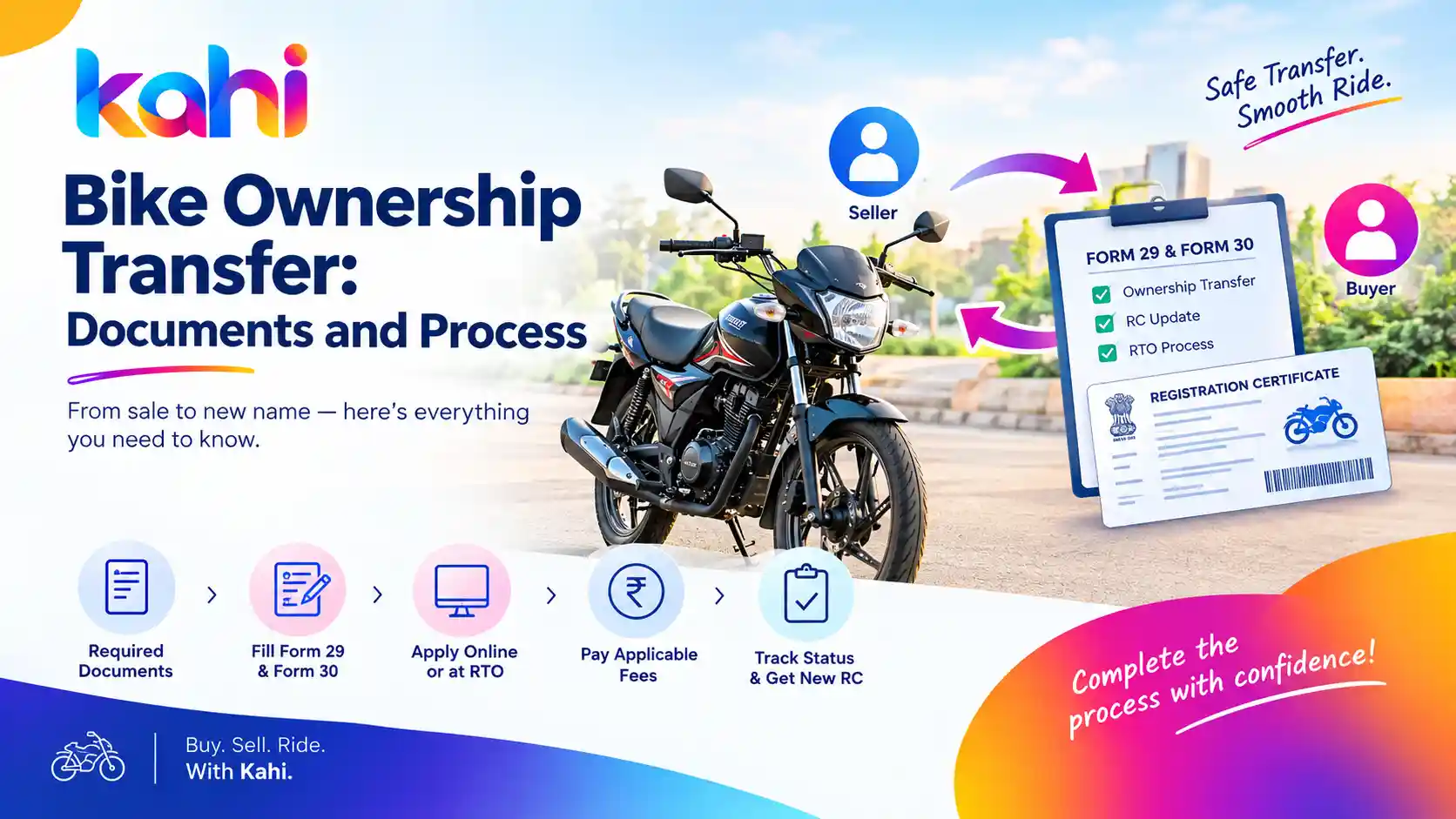
Buying or selling a second-hand bike can be a smart way to save money or earn a fair resale price. However, completing the payment and handing over the keys is not enough. You must also ensure that the bike’s registration certificate (RC) is transferred to the new owner’s name. Bike ownership transfer is the official process of updating the registered owner’s details with the Regional Transport Office (RTO). Completing this process helps protect both the buyer and seller from future documentation problems, traffic challans and ownership disputes. In this guide, we explain the documents required for bike ownership transfer in India, the role of Forms 29 and 30, the application process, possible fees and common mistakes to avoid. What Is Bike Ownership Transfer? Bike ownership transfer is the process of officially recording a new owner’s name in the vehicle registration records after a sale. For example, if you purchase a second-hand Honda, Hero, TVS, Bajaj or Royal Enfield motorcycle, you need to apply for an RC transfer so that the vehicle is legally recorded in your name. The same process applies when you sell your existing bike to another person. Completing the transfer helps establish a clear ownership record and makes it easier to manage insurance, future resale and other vehicle-related formalities. Documents Required for Bike Ownership Transfer Before starting the application, the buyer and seller should prepare the necessary documents. Requirements can vary depending on the state, RTO and circumstances of the transfer. Essential documents checklist Document Purpose Form 29 Notice of transfer submitted by the seller Form 30 Application for transfer of ownership Original Registration Certificate (RC) Confirms the vehicle’s registration details Valid bike insurance certificate Provides evidence of insurance Valid Pollution Under Control (PUC) certificate Confirms applicable emission compliance Identity proof May be requested for verification Address proof Helps establish the buyer’s address PAN card or Form 60 May be required under applicable rules Sale receipt or sale agreement Records the transaction and handover details Applicable RTO fee Payment for processing the transfer The RTO may request additional documents, photographs, an undertaking or other verification depending on local requirements. You can access official vehicle registration forms through the Parivahan website. What are Form 29 and Form 30? Form 29: Notice of transfer of ownership The seller uses Form 29 to notify the relevant registering authority that the bike has been sold and delivered to the buyer. Form 30: Application for transfer of ownership Form 30 is used to apply for the formal transfer of ownership in the registration records. It contains details relating to the seller, buyer and vehicle. Both forms are important in a standard sale. Make sure the information is accurate and that the required signatures are completed. Bike Ownership Transfer Process in India: Step by Step Follow these steps when buying or selling a second-hand bike. Step 1: Verify the bike and its documents Before making payment, check the registration number, chassis number and engine number against the RC. Also verify the seller’s identity and confirm that the seller is the registered owner or is legally authorised to complete the transaction. Check the following: If the bike has an active loan, coordinate with the lender to complete the required loan closure and hypothecation formalities. Step 2: Complete the sale agreement Prepare a sale receipt or written agreement that records the transaction. Include the bike’s registration number, make and model, agreed sale price, date and time of handover, and the names and contact details of both parties. Keep copies of the signed document and payment proof. These records can help establish when possession was transferred if a dispute arises later. Step 3: Fill in Form 29 and Form 30 The seller and buyer should complete the relevant ownership transfer forms with the correct details. Check the registration number, chassis number, names, addresses and signatures carefully. Errors or missing information can delay processing. Download the official forms from the Parivahan forms page. Step 4: Apply online or through the RTO Depending on the state and the services available for your registration, you may be able to begin the application online through the VAHAN vehicle services portal. The general online process is: Some applications require an RTO visit, document submission or vehicle verification. Follow the instructions shown for your particular registration. Step 5: Submit documents and pay the fee Submit the required documents according to the instructions from the portal or RTO. The applicable fee depends on the vehicle category and the service being requested. Additional charges may apply in certain cases, such as interstate transfers, delayed applications or related registration formalities. Always use an official payment channel and keep the receipt. Step 6: Track the application Use the application or acknowledgement number to check the transfer status through the relevant official service. If the application is pending, check whether the RTO requires additional documents, corrected information or an appointment. Step 7: Confirm the new RC details After approval, check that the new owner’s details have been updated in the registration records. The buyer should verify the updated RC information and retain the digital or physical document as applicable. The seller should keep the sale agreement, transfer acknowledgement and other proof of submission. Do not assume the transfer is complete simply because the application has been submitted. How Long Does Bike Ownership Transfer Take? The time required depends on the RTO, completeness of the documents, verification requirements and whether the transfer is within the same state or involves another state. Under the general central guidance for a normal sale, the buyer’s Form 30 application is to be made within 14 days for a vehicle registered within the same state and within 45 days for a vehicle registered outside the state, with additional requirements for an interstate transfer. State-specific procedures and instructions may differ, so confirm the applicable deadline with the relevant RTO before applying. Do not delay the paperwork after the sale. For official guidance, refer to Parivahan’s ownership transfer information. Bike Ownership Transfer Fees There … Read more