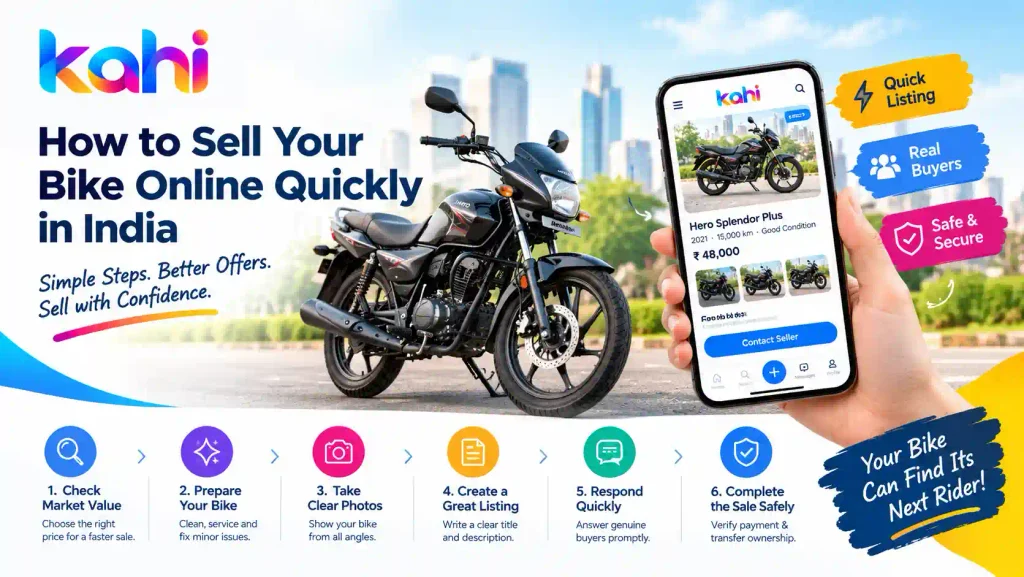
Selling your bike online can be a simple way to find interested buyers without visiting multiple dealerships. Whether you want to upgrade to a new motorcycle, sell an unused scooter, or get a better price for your two-wheeler, an online listing can help you connect with potential buyers.
However, selling quickly requires more than just posting an advertisement. You need to set the right price, upload clear photographs, write an attractive description, prepare your documents, and respond to genuine enquiries.
In this guide, we explain how to sell your bike online quickly in India while avoiding common mistakes and payment scams.
1. Check Your Bike’s Market Value
Before creating a listing, research how much similar bikes are selling for in your city.
Compare motorcycles or scooters with a similar brand, model, manufacturing year, kilometres travelled, ownership history, and overall condition.
For example, if you want to sell a five-year-old scooter, compare it with other scooters of the same model and age rather than newer models with different features.
Factors that affect your bike’s resale price
- Brand and model popularity
- Age of the vehicle
- Total kilometres travelled
- Engine and mechanical condition
- Service and maintenance history
- Tyre condition and appearance
- Insurance validity and available documents
- Local demand and availability of similar bikes
Set a realistic asking price based on your research. A price that is too high may discourage potential buyers, while pricing too low could mean losing money unnecessarily.
You can leave some reasonable room for negotiation, but avoid setting an unrealistic starting price.
2. Prepare Your Bike Before Listing It
First impressions matter when buyers compare several used bikes online.
Clean your bike thoroughly, including the body panels, mirrors, wheels, seat, and other visible parts. Check the lights, indicators, brakes, tyres, and other essential components.
If the bike has minor problems, consider whether repairing them is worthwhile before selling.
Quick preparation checklist
- Wash and clean the bike.
- Check tyre pressure and tyre condition.
- Make sure the lights and indicators work.
- Check for unusual engine noises or visible leaks.
- Gather available service records.
- Remove personal belongings.
- Be honest about scratches, repairs, or mechanical issues.
You do not necessarily need to spend a lot on repairs or cosmetic improvements. Focus on safety, cleanliness, and presenting the bike accurately.
3. Take Clear Photos of Your Bike
Good photographs help buyers understand the condition of your bike before contacting you. Poor or incomplete pictures may reduce interest, even when the vehicle is in good condition.
Take photographs in daylight against a clean background.
Include pictures of:
- Front view
- Rear view
- Left and right sides
- Dashboard and odometer
- Seat, tyres, and wheels
- Engine area, where appropriate
- Any visible scratches or damage
Use recent photographs of the actual bike. Avoid heavily edited images or pictures taken from other websites.
For privacy and safety, do not publicly display sensitive personal information or unnecessarily expose identifying details in your documents.
4. Create a Free Online Bike Listing
Once your bike is ready, choose an online classified platform where buyers can browse used two-wheelers.
You can explore Kahi.in to post classified advertisements and connect with people interested in buying and selling products.
When creating your advertisement, provide accurate information about the bike and make it easy for potential buyers to understand your offer.
Details to include in your listing
| Listing detail | What to provide |
|---|---|
| Bike brand and model | Exact model and variant |
| Manufacturing year | Correct year |
| Kilometres travelled | Accurate odometer reading |
| Asking price | Realistic expected price |
| Condition | Honest description of wear and repairs |
| Ownership | Accurate ownership information |
| Location | City or relevant locality |
| Contact details | Appropriate way for buyers to reach you |
A complete advertisement can help filter out irrelevant enquiries and attract buyers who are genuinely interested.
5. Write an Attractive Bike Description
Your title should clearly identify the bike and include important information that buyers may search for.
Instead of writing:
“Bike for Sale, Good Condition”
Use a more descriptive title, such as:
“2022 Honda Shine for Sale – Well Maintained, Single Owner”
Only use details such as “single owner” or “well maintained” when they are accurate.
In the description, explain why the bike is worth considering. Mention its maintenance history, fuel type, kilometres travelled, insurance status, and any known issues.
Here is a simple example:
Example bike listing description
“Selling my 2022 Honda Shine in good running condition. The bike has been used for regular commuting and has a recorded odometer reading of 18,000 km. Routine maintenance has been carried out, and the vehicle is available for inspection in [your city]. The asking price is ₹55,000, negotiable after inspection. Interested buyers can contact me for further details.”
Replace the sample details and price with your actual information. Never make claims about service history, ownership, or condition that you cannot support.
6. Respond to Buyer Enquiries Quickly
Once your listing is live, respond to genuine enquiries promptly. Buyers may be comparing several bikes, so clear communication can help keep them interested.
Be prepared to answer questions about the price, mileage, condition, insurance, servicing, and availability.
When someone contacts you:
- Answer questions honestly.
- Share additional photographs if needed.
- Arrange an inspection at a safe location.
- Confirm the buyer’s interest before spending time on a long meeting.
- Keep your minimum acceptable price in mind.
- Avoid sharing OTPs, banking PINs, passwords, or unnecessary personal details.
Prompt responses can make the process smoother, although they cannot guarantee a faster sale.
7. Negotiate the Right Selling Price
Many used-bike buyers negotiate before making a purchase. Decide your minimum acceptable price before starting discussions.
Consider the bike’s condition, market value, repair requirements, and comparable listings when evaluating offers.
If a buyer offers less than your expected price, explain the reasons for your valuation calmly. Maintenance records, a reliable running condition, and accurate documentation can help support your asking price.
Do not accept an offer simply because the buyer promises to complete the transaction immediately. Confirm the payment terms and complete the required paperwork before handing over the vehicle.
8. Keep Your Bike-Selling Documents Ready
Proper documentation is essential when selling a used two-wheeler in India.
Depending on the transaction and applicable requirements, you may need:
- Original Registration Certificate (RC), or the applicable digital record
- Valid insurance details
- Valid Pollution Under Control (PUC) certificate, where required
- Applicable ownership-transfer forms and application documents
- Identity and address documents where required
- Loan-closure documents or financier clearance, if the bike was financed
- Available service and maintenance records
For a standard registered vehicle transfer, Forms 29 and 30 are commonly relevant. Requirements can vary depending on the transaction and circumstances, so verify the current process with the relevant Regional Transport Office (RTO) or official Parivahan portal.
Do not assume that handing over the keys and receiving payment completes the legal transfer. Follow the applicable ownership-transfer procedure and retain copies of the sale documents and submission acknowledgements.
9. Avoid Online Bike-Selling Scams
Online marketplaces can connect you with genuine buyers, but you should remain alert throughout the transaction.
Common warning signs
Fake payment screenshots: A buyer may show an edited screenshot claiming that money has been transferred. Verify the credit independently through your bank.
QR-code payment tricks: You generally do not need to scan a QR code or enter your UPI PIN to receive money. Never follow instructions that require you to disclose credentials or authorise an unexpected payment.
OTP requests: Never share an OTP or banking PIN with someone claiming to be a buyer.
Unusual advance-payment requests: Be cautious if a prospective buyer asks you to pay a fee to release supposed funds or complete a suspicious verification process.
Pressure to hand over the bike early: Do not release the bike, keys, or original documents until payment has been verified and the agreed formalities have been completed.
Meet buyers safely, verify payments yourself, and keep a written record of the transaction.
10. Complete the Sale and Ownership Transfer
After agreeing on the price, record the sale details and follow the applicable transfer procedure.
Confirm that the payment has reached your account, complete the necessary documentation, and submit the ownership-transfer application through the appropriate official process.
Keep copies of the sale agreement or receipt, identity and vehicle details as appropriate, payment confirmation, and transfer submission records.
If the bike has an outstanding loan, resolve the relevant financing and hypothecation requirements before completing the transfer.
Following these steps can help reduce disputes after the sale.
11. Common Mistakes to Avoid When Selling a Bike Online
Avoid these mistakes if you want to make your listing more effective:
- Setting an unrealistic asking price
- Uploading blurry or insufficient photographs
- Hiding mechanical problems or accident history
- Providing incomplete or incorrect vehicle details
- Ignoring genuine buyer enquiries
- Sharing sensitive banking information
- Accepting unverified payment screenshots
- Handing over the vehicle without proper documentation
- Forgetting to follow up on ownership transfer
A transparent listing and a safe transaction process can help build buyer confidence and improve your selling experience.
Final Thoughts
Selling your bike online quickly in India becomes easier when you prepare the vehicle, research its market value, upload clear photographs, and create a detailed advertisement.
Respond to genuine buyers promptly, negotiate realistically, and keep the necessary documents ready. Most importantly, verify payment and follow the official ownership-transfer process before considering the sale complete.
If you are ready to advertise your two-wheeler, visit Kahi.in to explore online classified listing options and connect with potential buyers.
Frequently Asked Questions
1. How can I sell my bike online quickly in India?
Research the market price, clean your bike, take clear photographs, create a detailed listing, and respond promptly to genuine buyers. Keep the documents ready to avoid unnecessary delays.
2. Where can I list my used bike online?
You can explore online classified platforms such as Kahi.in. Review the available listing options and provide accurate vehicle details when publishing your advertisement.
3. How do I decide the selling price of my bike?
Compare similar bikes based on model, year, mileage, condition, and location. Consider repair requirements and local demand before setting your asking price.
4. Which documents are required to sell a bike in India?
Commonly relevant documents include the RC, insurance details, applicable PUC certificate, and ownership-transfer forms. Additional documents may be required depending on the vehicle, financing status, and RTO requirements.
5. How can I avoid payment scams when selling my bike?
Verify money directly through your bank, never share OTPs or banking PINs, and do not rely on screenshots as proof of payment. Be cautious of QR-code instructions and requests to pay fees to receive money.
6. Do I need to transfer ownership after selling my bike?
Yes. Follow the applicable official ownership-transfer procedure and retain records of the transaction and submission. Do not rely only on handing over the keys or signing a receipt.
7. Is it better to sell a bike to a dealer or an individual buyer?
A dealer may offer convenience, while an individual buyer may sometimes offer a different price. Compare the net amount, payment safety, time involved, and documentation requirements before deciding.