
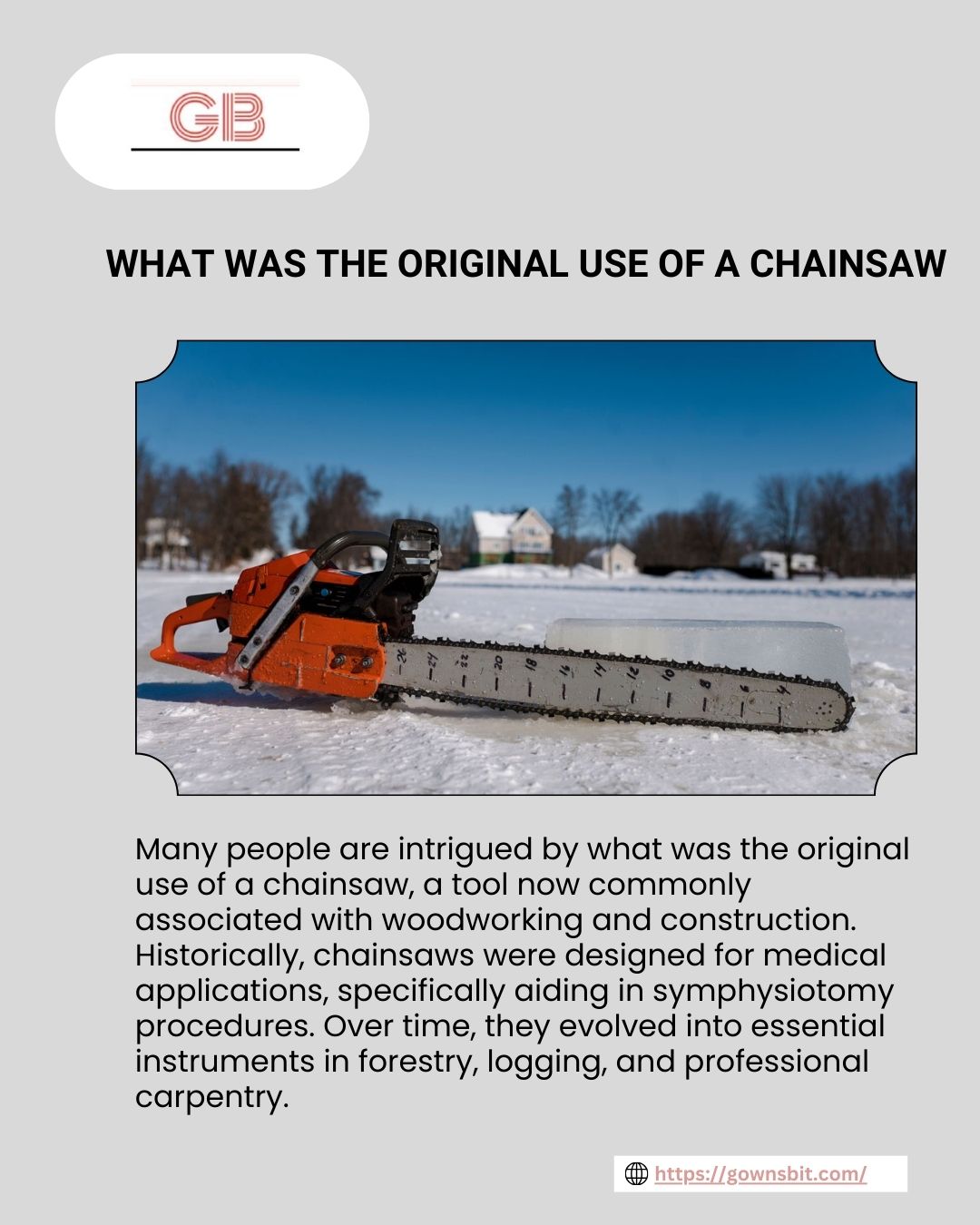
When exploring what was the original use of a chainsaw, many assume it was designed solely for felling trees. Interestingly, the earliest chainsaws were developed in the 18th century as surgical tools. These early devices were miniature versions, intended to assist with precise bone cutting during medical procedures, particularly in childbirth and orthopedic surgery.
Over time, the chainsaw evolved significantly. By the 20th century, it transitioned into forestry and timber industries, becoming an indispensable tool for logging and woodcutting. Its mechanical design—originally engineered for delicate precision—proved highly adaptable, allowing for efficient large-scale cutting. This evolution highlights the interplay between technological innovation and practical application, bridging medical needs and industrial demands.
At Gowns Bit, we emphasize understanding the historical and technical background of tools like the chainsaw. Recognizing the evolution of chainsaws from surgical instruments to forestry equipment offers valuable insight into mechanical design principles and ergonomic advancements. Additionally, exploring these origins demonstrates how early innovation can transform industries over time, influencing both safety standards and performance efficiency.
Whether for historical research, educational content, or professional reference, appreciating what was the original use of a chainsaw enriches our knowledge of engineering development. Understanding these roots not only enhances technical literacy but also provides context for modern applications, from construction to specialized woodwork.
Overview
- Service Type: Software & Web Development